

Development description

DEVELOPMENT SOLD!

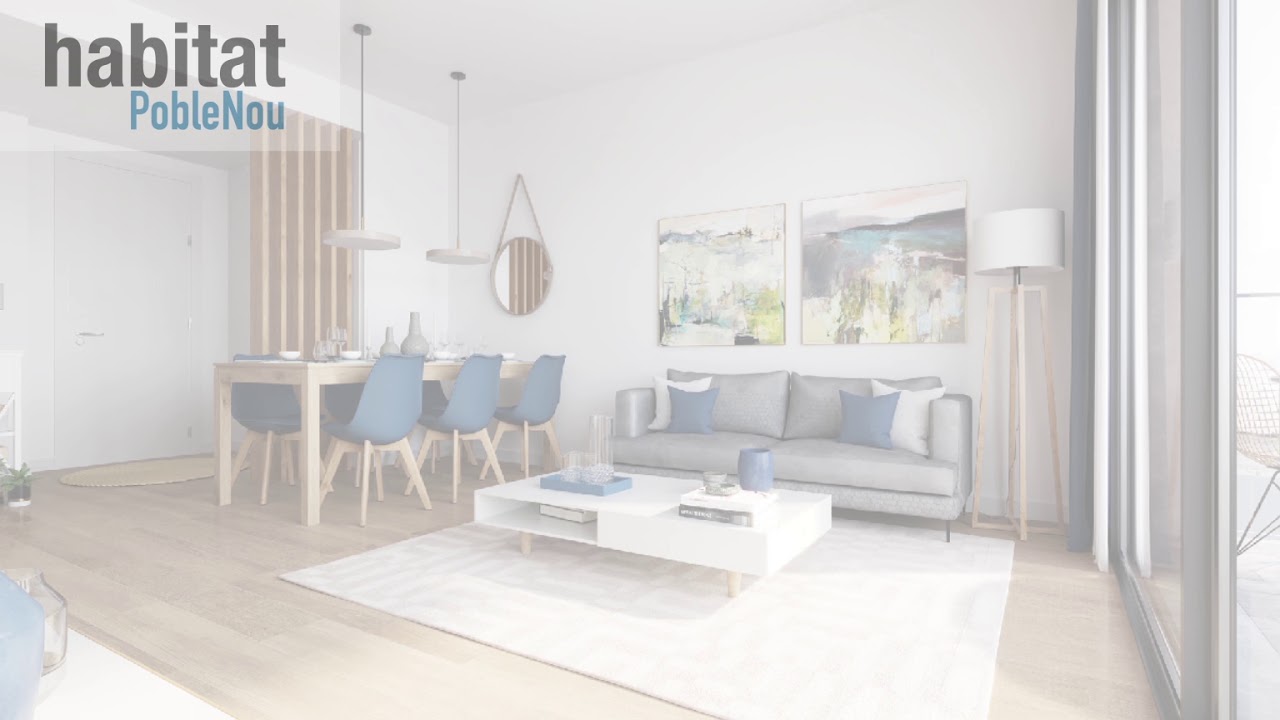
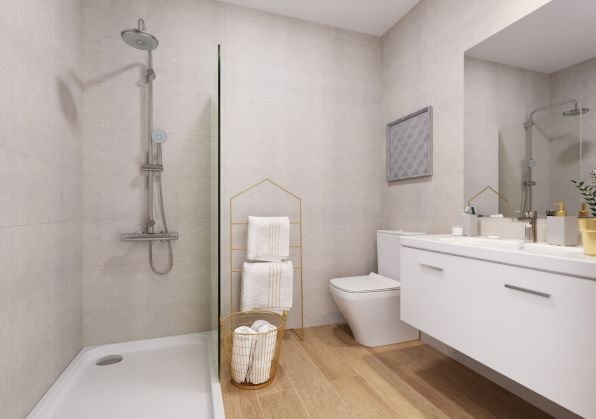
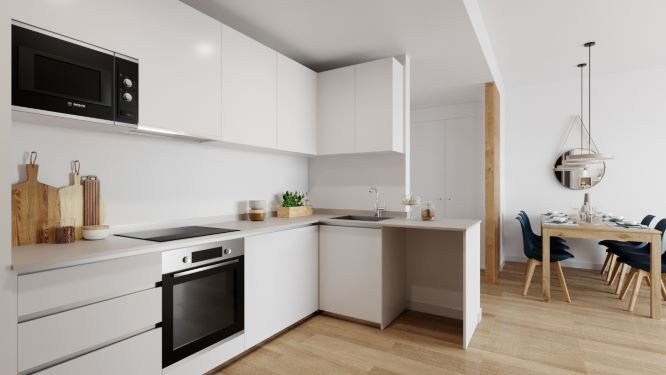
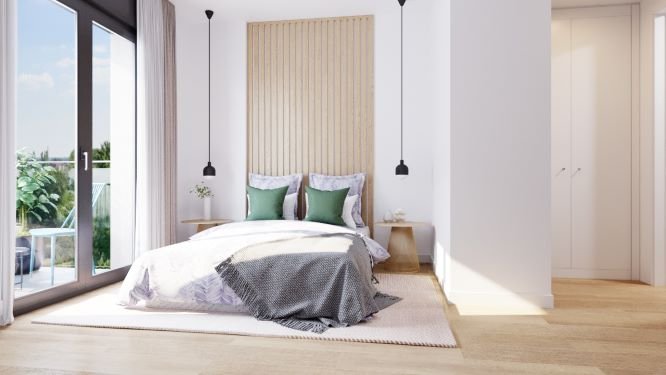
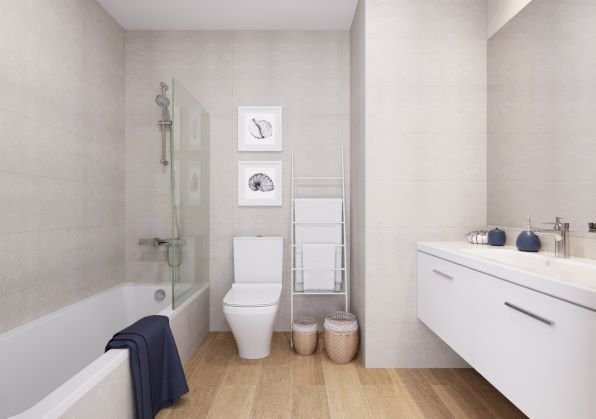
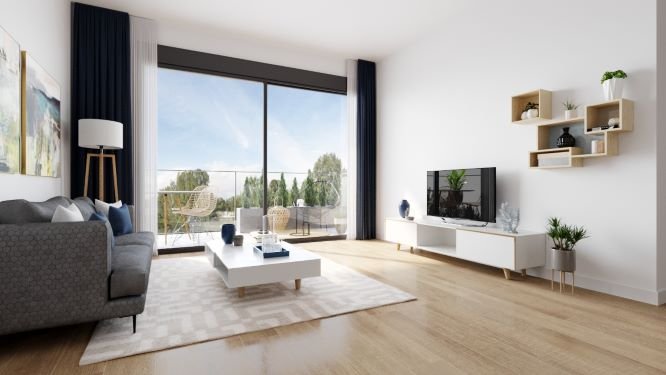
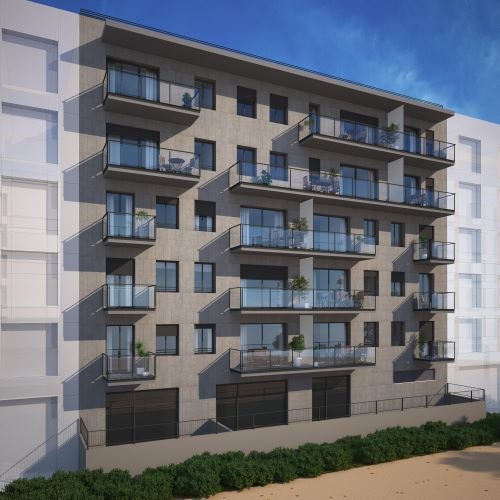
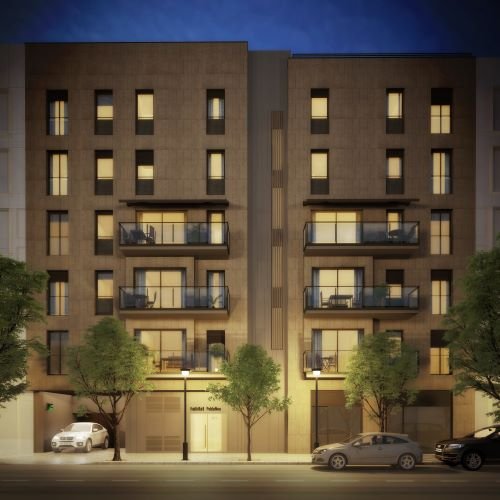
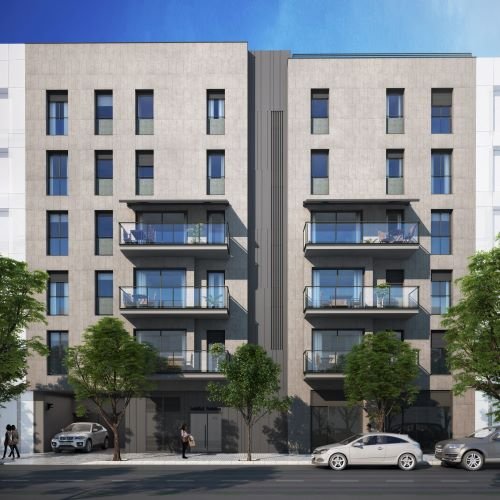
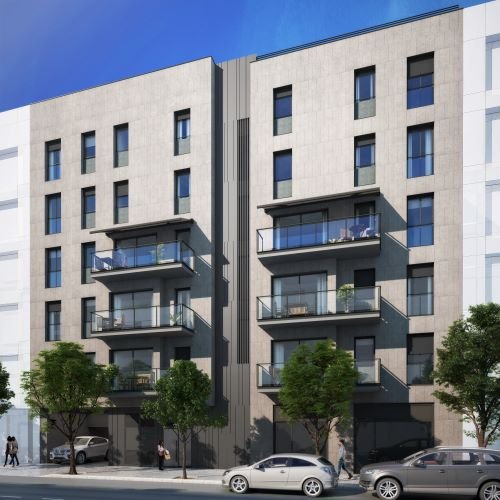
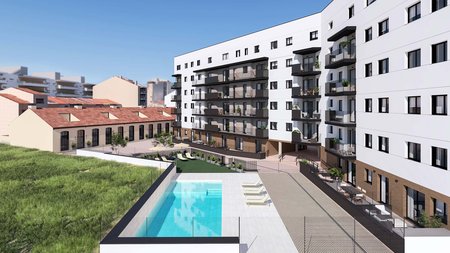
Habitat Poblenou is a magnificent development with just 18 2, 3 and 4 bedroom homes, garage space, storage room and two retail spaces with terraces. Here you will enjoy a very comfortable home, full of light and with top quality finishes, only a few minutes away from the beach and Rambla at Poblenou. This development does not have social housing.

Poblenou is one of the most attractive districts in Barcelona and within the 22@ district, which is renowned for housing some of the most well-known Technology Startups and International Businesses like Facebook, Amazon, General Electric, Wework and American Express, etc, which are transforming the area into a business district.

It is a well-established neighbourhood, where we have access to all services (health centres, universities and schools, sports facilities, large shopping centres and magnificent parks, etc. ) and are close to the beach, which is a 15 minute walk away. The area has excellent connections by underground, tram and buses, and quick access to the city’s main roads, such as Ronda Litoral, Avenida Diagonal and Gran Vía, which means mobility in and out of the city is easy.

All the homes have outside views with large windows and terraces, making them very bright. The outstanding layout is fully functional and ensures optimum use of all rooms. The apartments are sold equipped with the latest technology, to ensure energy saving and efficiency. 

Ubication: Calle Espronceda 127, 129, Barcelona

Construction company:
Certis
Project:
BAC
Finance:
Banco Santander, S.A.

Downloadable documents

Downloadable documents attached to the promotion.


Location

Location of the development
Sales office location

Sales office

Address:
C/ Espronceda, 127 , Barcelona , Barcelona
Opening hours:

Promotion 100% sold


Delivered development

FAQs About Buying a New Home

Buying a new home is a significant decision, and it's natural to have questions about the process, financing, and necessary procedures. In this section, we answer the most frequently asked questions, providing you with all the essential information before making your purchase. From reserving a home to understanding associated costs and the key handover process, you'll find clear and detailed answers here.

If you’d like details about a property, development location, or wish to schedule an appointment with a sales representative, you can contact us by calling our toll-free number 900 100 420. A representative will be happy to assist you and connect you with the appropriate person.

You can also visit our website to explore available developments, floor plans, standard prices, specifications, photos, and more.

Pre-reserve your new-build home online through our website and in accordance with the published terms and conditions. Check the available developments and choose the property that best suits your needs. Click on “pre-reserve” and secure your ideal home. The pre-reservation requires a payment of €500. Paying this amount will block the selected property for a maximum period of 7 calendar days, during which the reservation contract must be formalised.

Each development’s webpage provides a detailed dossier containing:

  • Property layout
  • Development location
  • Quality specifications
  • Floor plans and finish options
  • Multimedia content: videos, infographics, and 360º virtual tours

For further details, you can visit our sales offices, request a video call, or contact us at 900 100 420.

Buying off-plan offers several benefits, including:

  • More competitive prices compared to completed homes
  • The ability to choose your preferred unit within the development
  • Personalization options for finishes in many cases
  • Staggered payments, allowing for better financial planning

Yes, at Habitat Inmobiliaria, you have the option to personalize certain interior finishes, such as flooring, paint, and tiling. Some options are included in the price, while others may involve an additional cost.

To ensure smooth construction progress and meet delivery deadlines, customization is available only within specific timeframes, determined based on construction progress. After the deadline, homes will be completed with the standard finishes selected by Habitat Inmobiliaria.

The first step is reserving your home, and to do this you’ll need to present the following documentation for each of the future buyers, assuming of course that you are purchasing the property as a private individual.

  • Buyer(s) personal details: name and surname(s), marital status, address, contact telephone number, email address etc.
  • Photocopy or scanned copy of the national identity document or passport/ residence card for all of the buyers.
  • Fill in the KYC identification form required by the law on the prevention of money laundering and the financing of terrorism.
  • Your most recent tax declaration (or equivalent) and your employment record if retired.
  • Proof of the origin of the funds provided.
  • An official document from your bank confirming your account details

If the purchase is being made in the name of a legal entity, you will need to consult the sales staff, as circumstances vary. In all cases it will be necessary to accredit the company’s identification details, those of its proxy(ies) and all the information that accredits the origin of the funds provided.

  1. Payment of Taxes: In general terms, the first payment in public deed for a new home by a developer is subject to value added tax (at the reduced rate of 10% of the purchase price) and stamp duty (at the rate established in each individual autonomous community, and which is usually between 0.5 and 1%, in Madrid this is 1%). However, in particular cases and taxpayer situations, certain allowances and exemptions may apply. The reduced VAT rate of 10% will also apply to the purchase of up to two parking spaces per dwelling and annexes located therein acquired jointly in the same public deed. Otherwise, the purchase of parking spaces and storage rooms acquired individually will be taxed at the general rate of 21%. In the case of a second-hand property, the transaction would be subject to a property transfer tax called the Impuesto sobre Transmisiones Patrimoniales Onerosas (at the rate established in each Autonomous Community, in Madrid this is 7%). The transfer of ownership would also require the payment of the Tax on Gains in Value of Urban Land (or Municipal Gains Tax) by the seller.
  2. Legal Expenses: These are fees charged by the notary for the execution of the deed of sale, and are calculated in accordance with a tariff set by the government. These fees vary depending on the sale price as reflected in the deed of sale.
  3. Registration Costs: These are the fees charged by the registrar for the registration of the sale and purchase in the Land Registry. Like the notary’s fees, these are calculated according to a tariff set by the Government, and they vary depending on the sale price of the property.
  4. Administrative or Processing Fees: These are the fees charged by the gestoría (this is a sort of agency that deals with official administrative processes in Spain) for carrying out the formalities subsequent to the signing of the deed of purchase (payment of taxes, registration, processing of capital gains, change in ownership of the property in the Land Registry). This may also include certain expenses prior to the signing of the deed, such as the verification of the title deeds and the state of encumbrances on the property.

The developer must supply detailed project information, including:

  • Building specifications
  • Property and communal area plans
  • Building permit
  • Payment structure and financing conditions
  • Energy efficiency certification
  • Guarantee or insurance for advance payments

Typically, payments are divided as follows:

  1. Reservation: An initial amount to secure the property.
  2. Contract signing: Usually, 20% of the total price is paid in installments during construction.
  3. Final payment: The remaining amount is paid upon signing the title deed and receiving the keys, often via a mortgage.

You can choose from:

  • Subrogationto the developer’s mortgage: If the developer has an existing loan, you may adopt its conditions.
  • A new mortgage with another bank: You will need to arrange for an appraisal and formalization of the loan separately

The penitential deposit contract is a contract whereby the buyer proceeds to reserve, for a set period of time, the property that he intends to purchase, paying a certain amount as a deposit. The deposit is paid as a penitential deposit, regulated by Article 1454 of the Civil Code, which allows the contract to be cancelled unilaterally by the buyer, who agrees to forfeit the amount paid, or by the seller, who will be required to return double the amount received.

  • After the registration of the Office, you must obtain an Activity Licence (a licence that authorises opening and operation) in order to be able to occupy it. Therefore, the buyer must be a private individual or self-employed person who is registered as a self-employed worker, or with the corresponding professional association, or a company that performs an activity compatible with those permitted in the area by the local council, and in both these cases they must be registered for Economic Activities Tax (Impuesto de Actividades Económicas). It is the buyer who must present the business project to the corresponding local council, justifying the distribution of the office space and the uses of different areas in order to justify the granting of the Business Activity Licence.
  • 18% VAT is payable on office space.

This is what is known generally as municipal gains tax. It is a direct, municipal tax that established on a voluntary basis by local councils, who are fully responsible for its management. It is levied on the increase in value of urban plots of land, as evidenced at the time of transfer and experienced over a maximum period of 20 years. This increase is determined by applying a percentage of the value of the land (which generally coincides with the cadastral value of the land as reflected in the most recent property tax bill), as determined in each case by the local councils, depending on the number of years that the property has been in the seller's possession.

Also known as Plusvalía Municipal, this is a local tax levied on the increased value of urban land over time. The taxable amount is based on the cadastral land value and the number of years the seller has owned the property. The exact rate is set by each municipality.

When buying a new property, you will have to pay VAT, stamp duty (AJD), as well as notary, registry and, optionally, agency fees. The exact amount will depend on the price of the property and the autonomous community where it is located.

This is a direct universally applicable tax that is mandatory for municipalities to levy, and management is shared by the state administration. The taxable event is constituted by the ownership of real estate, whether rural or urban, or by the ownership of certain rights in rem over the said property, and it is levied on the value of the said property. This will generally coincide with the cadastral value assigned to it, on which the rate of taxation established by the respective local councils will be based, within the limits of the minimum and maximum percentages permitted by law.

It is a tax that accrues annually, and is payable by the owner of the property or right in rem on 1 January each year. However, in municipalities such as Madrid, property tax (known in Spain as IBI) is levied between 1 October and 30 November.

The purpose of the building book of a residential building is for the owners to know the building they are using and to have sufficient documentation and information necessary for proper use and maintenance.

The content of the Book of the Building is regulated by regulation, and in general terms consists of:

  1. Log books: general data of the building, the record of incidents and the record of maintenance and repair operations.
  2. Technical specification documents: Includes the Final Work Project, an annex with the main technical data of the building and its elements, in the form of data sheets, and the use and maintenance and emergency manuals.
  3. Document archive: This file contains the construction and occupancy licenses of the building, the quality control certificate, the final certificate of the construction work, the certificate of reception of the work, the public deed of declaration of new construction and other documents related to the building. If the property is acquired by a single person, he/she will be in charge of keeping the Building Book. However, in the case of the existence of a community of owners, it will be the person who holds the position of administrator of the property, or President of the Community, who will be the custodian of the book of the Building.

In summary, it includes technical data of the building, licenses, certificates and maintenance manuals. In buildings with a community of owners, it is kept by the administrator or president.

Corpus Ccertum is regulated by Article 1.471 of the Civil Code and it means that the price is not calculated or considered according to the surface area of the property being sold, or what would amount to the same thing, according to a price per unit of measurement, but according to the global sum agreed.

The energy efficiency certificate is an official document drawn up by a competent professional that includes objective information on the building’s energy characteristics. The energy efficiency certificate classifies the building by calculating the annual energy consumption required to fulfil the energy needs of that building under normal conditions of occupancy and operation. It includes hot water, heating, cooling, ventilation and lighting.

The energy certification process concludes with the issue of an energy performance certificate and the assignment of an energy label. The energy rating scale is a seven-letter one, ranging from A (most energy-efficient) to G (least energy-efficient). The energy label indicates the energy rating of a building by assigning one of these letters to it. This certificate is compulsory (with certain exceptions) for the owner of any individual part of an existing building (dwellings, offices or premises) that is the subject of a purchase or rental transaction.

Before signing the title deed, you will be able to make a courtesy visit to your home to check its condition. The developer will notify you in advance to arrange this visit within the established dates.

Once the construction has been completed and the First Occupancy License has been obtained, the developer will notify the buyers to coordinate the signing at the notary's office and the handing over of the keys.

At Habitat Inmobiliaria we always seek to offer our clients the best comfort and services. For this reason, we have a 100% digital service with which you can register the utilities of your new home.

Once you have received the manual of the property, where you will have all the relevant information, an agent will contact you to find out if you are interested in registering the utilities with this service.

Subsequently, you will receive an email with your access codes to the website and application, where you will be able to contract the services you want and those that best suit you and your family.

In addition, this way you will have the opportunity to manage everything in a more agile and simple way thanks to the digital signature, with which you will avoid wasting time and unnecessary calls.

In this exciting journey towards the acquisition of your new home, Habitat Inmobiliaria wants to make sure that you feel accompanied every step of the way. Inthis link, you can download a guide where we introduce you to our team, who will be at your disposal at all times to provide you with the best service and personalized attention.

In addition, for more information, Habitat Inmobiliaria has a Customer Service Department that you can contact by calling 900 100 420. A manager will deal with your query with the corresponding department.